Showing posts with label Koenigsegg. Show all posts

Tuesday, July 6, 2010

WORLD'S TOP 10 EXPENSIVE CARS

Famous American Publication Forbes recently published a list of World's Top 10 Expensive cars. Most of the cars included in the list are limited-edition cars or next-generation super cars.
The interesting thing to note is that only two manufacturers-Koenigsegg and Lamborghini, have got more than 1 cars of their brand in the list.

Let's go through the details of World's Top 10 Expensive cars:-


1. Koenigsegg Trevita

Price : $ 2.21 million (€ 1.58 million)

Koenigsegg, the famous Sweedish supercar manufacturer bagged the 1st place in the list of World's Top 10 Expensive cars. The major peculiarity of this car is that it uses Biodiesel which is a relief for the environment. The car has a maximum power of 1018Bhp @ 7000rpm. It's 0-100km/h time is 2.9 seconds and Top Speed is greater than 400km/h.


2. Bugatti Veyron 16.4 Grand Sport

Price : $ 2 million (€ 1.43 million)

Bugatti veyron is a familiar sight in almost all rankings related to cars. Bugatti Veyron 16.4 Grand Sport occuppied the 2nd place in the list of World's Top 10 Expensive cars. It is also the World's fastest car with a top speed of about 400 km/h. Another interesting thing is that only 150 units of Bugatti Veyron 16.4 Grand Sport have been manufactured till now.


3. Pagani Zonda Cinque Roadster

Price : $ 1.8 million (€ 1.29 million)

The Pagani Zonda Cinque Roadster is an exclusive car from Italian manufacturer Pagani, with only 5 units produced till now. It holds the place for the 3rd Expensive car in the World. The Pagani Zonda Cinque Roadster is powered by a Mercedes Benz AMG - M120 - 12 Cylinder engine, which gives it a maximum power of 750Bhp @ 7500rpm and helps it to attain a speed of 100km/h in just 2.7 seconds.


4. Lamborghini Reventon Roadster

Price : $ 1.56 million (€ 1.12 million)

The Lamborghini Reventon Roadster from famous Italian Supercar manufacturers holds the 4th place in the list of World's Top 10 Expensive cars. This power house from Lamborghini has a maximum power of 670Bhp @ 8000rpm and a top speed of 330km/h. This car touches the speed of 100km/h in 3.4 seconds.


5. Lamborghini Reventon

Price : $ 1.42 million (€ 1.02 million)

Lamborghini Reventon is Lamborghini's 2nd car in the list and it is the World's 5th Most Expensive car. It has a maximum power of 650Bhp @ 8000rpm and a 0-100km/h time of 3.3 seconds. Released in 2008, it still has got a place in the list of World's Top 10 Expensive cars.


6. Maybach Landaulet

Price : $ 1.4 million (€ 1.00 million)

Maybach Landaulet is an exclusive car from famous German laxury car manufacturer Maybach. It holds 6th place in the list of World's Top 10 Expensive cars. It is equipped with almost every facilities to ensure the comfort and safety of its occupants. It has got a maximum power of 604Bhp @ 4800-5100rpm and a Top speed of 250 km/h.


7. Koenigsegg CCXR

Price : $ 1.3 million (€ 932,768)

Koenigsegg CCXR holds the 7th place in the list of World's Top 10 Expensive cars. It is actually the basis of Koenigsegg Trevita. It has an acceleration of 0-100km/h in 3.1 seconds and a top speed of 400+km/h. The maximum power of the Koenigsegg CCXR is 1018Bhp @ 7000rpm.


8. Koenigsegg CCX

Price : $ 1.1 million (€ 789,265)

The Koenigsegg CCX is the 3rd car from Koenigsegg in the list and bagged 8th place in the list of World's Top 10 Expensive cars. It has a maximum power of 806Bhp @ 7000rpm. The car takes 3.2 seconds to attain a speed of 100km/h and has a Top Speed above 395km/h.


9. Leblanc Mirabeau

Price : $ 765,000 (€ 548,898)

The Leblanc Mirabeau is a real piece of art with the spirit of race. It bagged the 9th place in the list of World's top 10 Expensive cars. The Mirabeau has a power more than 700Bhp. The top speed for this wolf pit bull is approximately 370km/h.


10. SSC Ultimate Aero

Price : $ 740,000 (€ 530,960)

SSC Ultimate Aero is an American built mid-engine super car from Shelby Supercars. It is the 10th most Expensive car in the world. The Ultimate Aero has a power of 1287Bhp @ 6075rpm. The top speed of Ultimate Aero is 415km/h and 0-100km/h time is 2.88 seconds.


Tags:- World's most expensive cars, World's most costly cars, World's most luxurious cars, luxury cars, expensive cars, SSC Ultimate aero price, SSC Ultimate aero power, SSC Ultimate aero acceleration, Leblanc Mirabeau price, Leblanc Mirabeau power, Leblanc Mirabeau acceleration, Koenigsegg CCX price, Koenigsegg CCX power, Koenigsegg CCX acceleration, Koenigsegg CCXR price, Koenigsegg CCXR power, Koenigsegg CCXR acceleration, Koenigsegg Trevita price, Koenigsegg Trevita power, Koenigsegg acceleration, Maybach Landaulet price, Maybach Landaulet power, Maybach Landaulet acceleration, Lamborghini Reventon price, Lamborghini Reventon power, Lamborghini Reventon acceleration, Lamborghini Reventon Roadster price, Lamborghini Reventon Roadster power, Lamborghini Reventon Roadster acceleration, Pagani Zonda Cinque Roadster price, Pagani Zonda Cinque Roadster power, Pagani Zonda Cinque Roadster acceleration, Bugatti Veyron 16.4 Grand Sport price, Bugatti Veyron 16.4 Grand Sport power, Bugatti Veyron 16.4 Grand Sport acceleration

Sunday, April 11, 2010

Koenigsegg CCX - Pictures and Videos

Showcasing the super cool car, the Koenigsegg CCX. The Koenigsegg CCX is a mid-engined roadster from Swedish car manufacturer Koenigsegg priced at $545,568. It was awarded one of the 10 Most Beautiful Cars by Forbes Magazine. The CCX can accelerate from 0–62 mph (100 km/h) in 3.2 seconds and from 0–124 mph (200 km/h) in 9.8 seconds.

Koenigsegg CCX Video

CCX is an abbreviation for Competition Coupe X; the X commemorating the 10th anniversary, (being the Roman numeral for ten), of the completion and test drive of the first CC vehicle in 1996.

Specifications

Vehicle Type: - production car, two-door Coupe
Configuration: - Mid Engine
Engine: - Supercharged V8
Capacity: - 4700 cc
Torque: - 678 lb-ft at 5700 rpm
Horsepower: - 806 bhp at 6900 rpm
Transmission: - 6-Speed Manual
Length: - 169.0 inches
Width: - 78.6 inches
Height: - 44.1 inches
Weight: - 2601lbs
0-60 mph: - 3.2 sec
Top speed: - 245 mph
Price: - $545,568

The CCX was first unveiled on February 28, 2006 at the 2006 Geneva Motor Show although its existence was announced earlier. A derivative known as the CCXR is available, the main difference being that CCXR's engine is tuned to run on biofuel. The different fuel and tune allows the CCXR to produce 25% more power than the CCX.

More Koenigsegg CCX Videos

Sunday, March 28, 2010

2011 Koenigsegg Sports Car Agera - Celebrate 15 Years

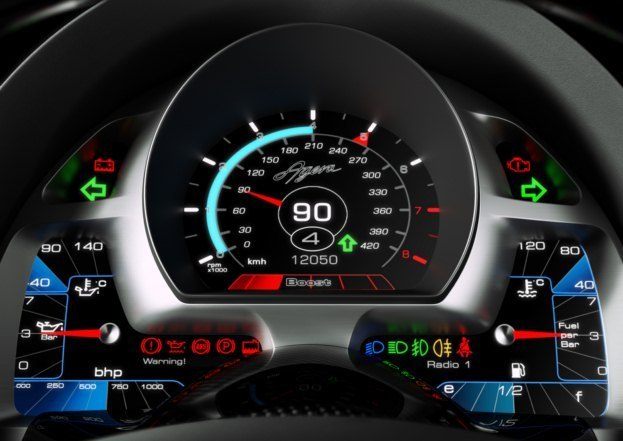
Geneva Motor Show 2010 - The new Koenigsegg Agera. To celebrate 15 years of making dream cars, Koenigsegg unleash their latest jewel, the Koenigsegg Agera. A new supercar aimed to take the Koenigsegg experience to the next level, both on the road and the track. 
2011 Koenigsegg Agera
The Agera is on display at the 80th Salon International de l’Auto in Geneva. The Agera shares some styling tweaks that are similar to the CCX and owes its name to the Swedish translation of “to act”, thus symbolizing the Koenigsegg philosophy of always improving its cars and pushing its designs to the limit.
2011 Koenigsegg Agera
Koenigsegg Agera is powered by Twin Turbo engine with 910 hp in term of running on regular petrol. Coming on to the major details, based on the regular CC, the Koenigsegg Agera boasts of a 4.7-liter twin turbocharged V8 producing 910 PS (669 kW/898 hp) at 6850 rpm and 1100 Nm (811 lb-ft) at 5100 rpm. There is over 1000 nm of torque available from 2680 to 6100 rpm.
2011 Koenigsegg Agera
To balance this, the Agera features the latest in braking technology with 392×36 and 380×34 ventilated and drilled ceramic discs. When combined with a dry weight of just 2,832 lbs and the sequential gearbox the Agera can sprint to 100 km/h in as little as 3.1 seconds, 200 km/h (124 mph) in 8.9 seconds and blast on to a top speed of 245+ mph. As well, new traction control is fitted with auto adapt functionality for different road conditions and driving styles as well as several manual settings.
2011 Koenigsegg Agera
Koenigsegg’s designers have tried to push through some difference via the slightly modified front and rear bumpers. However the car’s carbon-Kevlar body, removable top that stores into the bonnet and aluminum honeycomb reinforced carbon fiber chassis, all keep it close to the outgoing CCX.
2011 Koenigsegg Agera
The distinguishable additions are the all-new carbon fibre center console and tunnel assembly and the new type of ambient lighting called “Ghost Lights” where illumination shines through the car’s billet aluminum buttons and surfaces by way of invisible nanotubes.
2011 Koenigsegg Agera
Beside the new engine performance, Koenigsegg also features the new Koenigsegg Agera stitching and seams for Agera interior and has developed a new type of interior illumination, which shines through the billet aluminum buttons and surfaces by way of invisible nanotubes.
2011 Koenigsegg Agera
The Koenigsegg Sports Car Agera will be produced in parallel to the Award winning CCX and CCXR models. The pre-production show car will be put through its phases for the coming six month prior to the production car launch of the Agera. Pricing details have not been revealed as of now but it is being said that the supercar maker will bring a pre-production model of the Agera to the Swiss Motor Show. According to GTSpirit, just 16-20 Agera models will be built each year, starting later this year.

Monday, March 8, 2010

Geneva 2010: NLV Quant Concept


The second generation NVL Quant made its public debut in front of media yesterday in Geneva, bringing with it what NVL Solar, its creator, calls "a breakthrough the market eagerly has been anticipating for years." While this last statement is a matter of interpretation, the Quant does bring a range of interesting features. The most exciting thing about it, however, is the promise to turn production version rather sooner than later.


Set to be production ready next year, the Quant was designed to prove "cutting-edge supercars can combine speed, comfort and enjoyment with environmental integrity." It features two different battery systems ("a long-life metal-air battery or a rechargeable redox flow cell"), four torque-vectoring electric motors, a full carbon fiber chassis, and a revolutionary thin-film coated photovoltaic body.


The Quant has some initial performance figures which would give a regular, internal combustion engined supercar, a good run for its money: 2.8 seconds 0-100 km/h acceleration time and a top speed of 377 km/h (234 mph).


The latter converts light into electricity to supply the operating electronics and the battery. While it's a bit technical, NLV says the coating has "an average photovoltaic conversion efficiency of 38%, depending on ambient conditions, and a peak performance of over 50%." More importantly, the company believes they can tune the material's absorption characteristics to create multiple layers with their own unique absorption frequency. As impressive as this is, NLV estimates the film will have a degradation coefficient of only 5-6% over 20 years.


The Quant comes with four airbags, ABS and ESP, two infotainment panels for the rear seats, zone Climate Control system, LED front and rear lights and, la piece de resistance, NLV photovoltaic thin film solar coating all over the body of the car.


More Photos


Press Release


NLV Solar AG, a pioneer in photovoltaics and accumulator technology, have joined forces to create the Quant sport. The brainchild of this marriage of power and energy is a four-seater electric car - a breakthrough the market eagerly has been anticipating for years. A prototype is to be unveiled at the Motor Show Geneva 2010, with currently working to scale up for series production.

The NLV Quant is an exciting, revolutionary automotive project. Within the coming year, the NLV Quant will be fully engineered and ready for production. You can follow the last few stages. The design, drive system, range and photovoltaics of the Quant are already spectacular and record-breaking as individual components, and we believe that together they will mark a milestone in automotive history.

Technics

The NLV Quant is proof that cutting-edge supercars can combine speed, comfort and enjoyment with environmental integrity. It implents the mobile energy technology of the future. The NLV Quant has two different battery systems, a torque vectoring with 4 electric motors and a full carbon chassis. A thin-film coated photvoltaic car body supplies the operating electronics and also supports the battery. Gull-wing doors provide easy access to all four passengers.

Carbon Chassis

A reason for the car's low weight is the utilisation of a carbon-fibre monotube backbone chassis, construction, which houses the FAES system safely inside the centreline of the car at the lowest possible position, bringing down the centre of gravity and central mass point.

Using tradition lay-up, the vacuum bag generates the pressure for consolidating the carbon plies. In RTM process there are two moulds and the pressure comes only from the resin pump. The design becomes quite critical as inner and outer skin has to be perfectly defines in order to have a designed volume matching exactly the tooling volume. The risk is to have voids generated by not precise fitting of the inner cores.

Thin Film

The NLV Quant is coated with a thin film made of pyrite, which converts light into electricity to supply the operating electronics and also support the battery. This innovative pyrite technology is cost-effective, efficient and ecological.

NLV Solar AG has developed an iron-sulphur composite semiconductor using digital prototyping, with very promising results. The research indicates:

  • an average photovoltaic conversion efficiency of 38%, depending on ambient conditions, and a peak performance of over 50%
  • the possibility of fine-tuning the material's absorption characteristics by modification of its crystal lattice structure using ion implantation; stacked in a multilayer thin-film cell, it would be possible to tune each layer to a different target absorption frequency
  • as a thin-film cell, the material could be applied to substrates in a transparent, semi-transparent or tinted coating
  • the projected degradation coefficient is only 5-6% over 20 years

Electric Power

The NLV Quant allows for the modular installation of either a long-life metal-air battery or a rechargeable redox flow cell. These are both future-oriented, secure energy sources which help give the Quant exceptional power and range.

Speed

The projected curb weight of 1680 kg is very light considering that it is a battery-powered, four-seater, luxury performance car. This is partly due to the four-motor installation- a remarkable achievement which allows the NLV Quant to deliver 0-100 km/h in 2.8 seconds and hit a top speed of 377 km/h.

Gullwing

The gull-wing doors set the NLV Quant apart from any other four-seaters on the market. As well as being a stylish feature, they also make entry to the car more ergonomic, thanks to the lack of B-pillars. They provide easy access to both the front and rear passenger seats. The unique split side-lite feature allows either passenger to open and close the front and rear side windows separately, despite the fact that there is only one door per side.

Preliminary Specs

  • Power: 600 kW ( 4x 150 kW), 800 bhp
  • Rotation speed 12'000 U/min
  • Torque: 1500 nm
  • 0-100 km/h: 2,8 seconds
  • Top speed: 377 km/h
  • Curb weight: 1680 kg
  • Wheelbase 3102 mm
  • Track - Front: 1730 mm; rear: 1729 mm
  • Wheels/tyres ? front: 245/35 - 23"; rear: 285/30 - 23" - low friction tyres
  • Width: 2016 mm incl. rear-view mirrors; length: 4879 mm; height: 1335 mm
  • Rear-wheel drive
  • Four-wheel brake regeneration
  • Minimum 4 airbags, ABS and ESP and torque vectoring
  • 2 infotainment panels Adjustable rear seats
  • 3 zone Climate Control system
  • Generous leg room in the rear
  • LED front and rear lights
  • Body covered in NLV photovoltaic thin film solar coating
  • Accumulator with cooling liquid (weight ca. 500kg)
  • Operating voltage 420 V
  • Inverter voltage 350 V
  • Price: TBD

Features

  • NLV Quant has two different battery systems: on the one hand, purely conventional accumulator technology with a transition metal and air mixture, and on the other hand, a pure redox flow cell
  • Thin-film photovoltaic coating of car body and windows
  • Torque vectoring with 4 electric motors for wheel-specific torque distribution to enhance the vehicle's agility and stability
  • Full Carbon chassis and carbon body
  • Minimised running and manufacturing costs thanks to new technology
  • Optimised safety
  • Unique/functional design, vehicle comfort and loading capacity

Thursday, March 4, 2010

Koenigsegg Agera

Koenigsegg Agera
Koenigsegg Agera
Koenigsegg Agera
Koenigsegg Agera Photos
Koenigsegg Agera Wallpapers
Koenigsegg Agera Images
Koenigsegg Agera Pictures

Wednesday, February 24, 2010

Geneva Motor Show: NLV Quant returns with less Koenigsegg


A year ago in Geneva, NLV Solar and Swedish supercar builder Christian von Koenigsegg turned up with a four-seat electric car that incorporated photovoltaic energy collectors in the body surface. At that time, it was nothing more than a styling buck. Next week, again in Geneva, NLV will be back to provide an update on the Quant (this time without Koenigsegg). The company is now planning to have a running prototype of the Quant on the road later this year with a production-certified machine by 2012.
more detail. ...

Thursday, January 28, 2010

Koenigsegg CCXR Trevita worth more than all of the dust

Koenigsegg CCXR Trevita

Swedish car manufacturer Koenigsegg, recently fought with the Dutch company Spyker for the right to possession of the brand Saab, in order to reach the mass market models, returned to his more usual for a business, building a supercar, the value of which presented a new masterpiece of Scandinavian title of most expensive car in the world.

Koenigsegg CCXR Trevita most expensive and luxurious car in the world, because his body generously showered with grit. This is an innovative technology of the new carbon-fiber bodywork and other parts of the supercar.

Carbon fiber enclosures Car Koenigsegg known throughout the world: in their production technology applies a special weave of carbon fibers. Just before the body had the traditional black color, but now the company has developed a unique method of production of carbon fiber, through which car body sparkled silver and diamond color. The secret technology lies in the fact that each individual fiber is put diamond dust.

Exclusive coverage provides unsurpassed effect: When sunlight on the body of the car - it starts to flash, as if strewn with thousands of diamonds.

Diamond sports car Koenigsegg, with 5-liter V8-shaped motor power 1018 hp, has a maximum speed of 100 km / h in 2,9 sec. "The upper threshold speed - 402 km / h, and this is not the limit, as developers claim.

In completing Diamonds are carbon-ceramic brakes with ABS, "Hydraulics", lifting a car to increase ground clearance, shift paddles speeds, an infotainment system and monitoring of tires, exhaust system, made of special alloy inconell, as well as dual carbon spoiler.

In the light will appear only three Trevita. On this "pedigree" of this unique branch of the family Koenigsegg interrupted because Trevita in translation from Swedish means "three whites".

Monday, December 14, 2009

Koenigsegg cc wallpapers


Koenigsegg cc
Koenigsegg cc
Koenigsegg cc wallpapers
Koenigsegg cc
Koenigsegg cc
Koenigsegg cc pictures
Koenigsegg cc
Koenigsegg cc

Saturday, November 28, 2009

Cheap Car Koenigsegg Poster

Cheap Car Koenigsegg Poster: Koenigsegg Posters, Koenigsegg Wallpaper, Koenigsegg Picture PR: wait... I: wait... L: wait... LD: wait... I: wait...wait... Rank: wait... Traffic: wait... Price: wait... C: wait...

Saturday, October 3, 2009

Koenigsegg CCR Design Sport Car Concept

Koenigsegg CCR Design Sport Car Concept

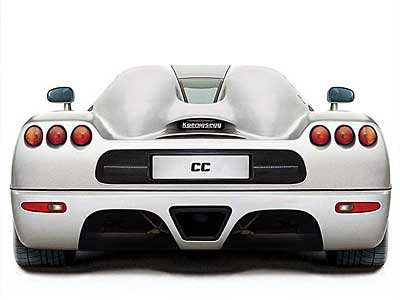
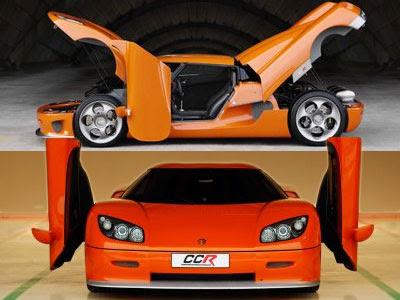
Koenigsegg's design seeks to give an interpretation of strength and flowing motion. The body of a Koenigsegg is formed for one ultimate purpose; speed. Its beauty is the beauty of speed itself. The surfaces are shaped to perfectly aerodynamic, an appearance that does not deceive. All aspects of this machine serve its one fundamental objective. Both the body and chassis of a Koenigsegg are made of extremely lightweight carbon fibre composite, reinforced with Kevlar and aluminium honeycomb. Its race-bred suspension system brings the driver in control of all movement, even under the toughest racing conditions.
The car was styled by Christian von Koenigsegg himself but its shape is largely dictated by aerodynamics. It is not as striking as Pagani or Enzo. At some angles it even looks bulky, like a big whale. But the whale delivers a sense of power that you can't find in its rivals either. Because of the targeted top speed, the body is designed to be so smooth that it has a very low drag coefficient of 0.30. This is much lower than Enzo (0.36), SLR (0.37) and Carrera GT (0.39). Unsurprisingly, the downside is a rather low downforce, just 50kg at the front and 70kg at the back. For comparison, an Enzo generates 775kg while Pagani achieves 500kg.
The chassis is constructed like other supercars. Central to it is a carbon-fiber tub (Koenigsegg called it "semi-monocoque") attached with steel subframe up front and aluminum subframe at the rear for mounting engine, gearbox and suspensions. Chassis rigidity is 28,100Nm per degree despite of the targa roof. The whole bodyshell is also carbon-fiber. Koenigsegg claims a dry weight of 1175kg, which translates to 1275kg when fluid and fuel are loaded, i.e., what we usually refer to "kerb weight". In other words, CC8S is about as light as Pagani and Saleen S7, while being around 100 kilograms lighter than Enzo and Carrera GT.